Labor is hard to find. A good foreman — someone who knows every job, watches every shift, and catches a problem two days before it becomes one — is harder still. Foreman doesn't replace that person. It gives every shop owner a version of that visibility, built from the shift and job data your shop is already capturing.
Once a shop is tracking time and jobs well — hours landing on the right job as they're worked, shifts reviewed and signed off — that data is sitting there whether anyone looks at it or not. Foreman's job is to look at it every day so you don't have to go digging for it.
The Problem Foreman Solves
A shop owner running the floor knows the same three things need answering every morning: who's on the floor today, which jobs are quietly running long, and who still needs a callback. Finding those answers usually means opening the schedule, then the job list, then the CRM — and doing it again tomorrow.
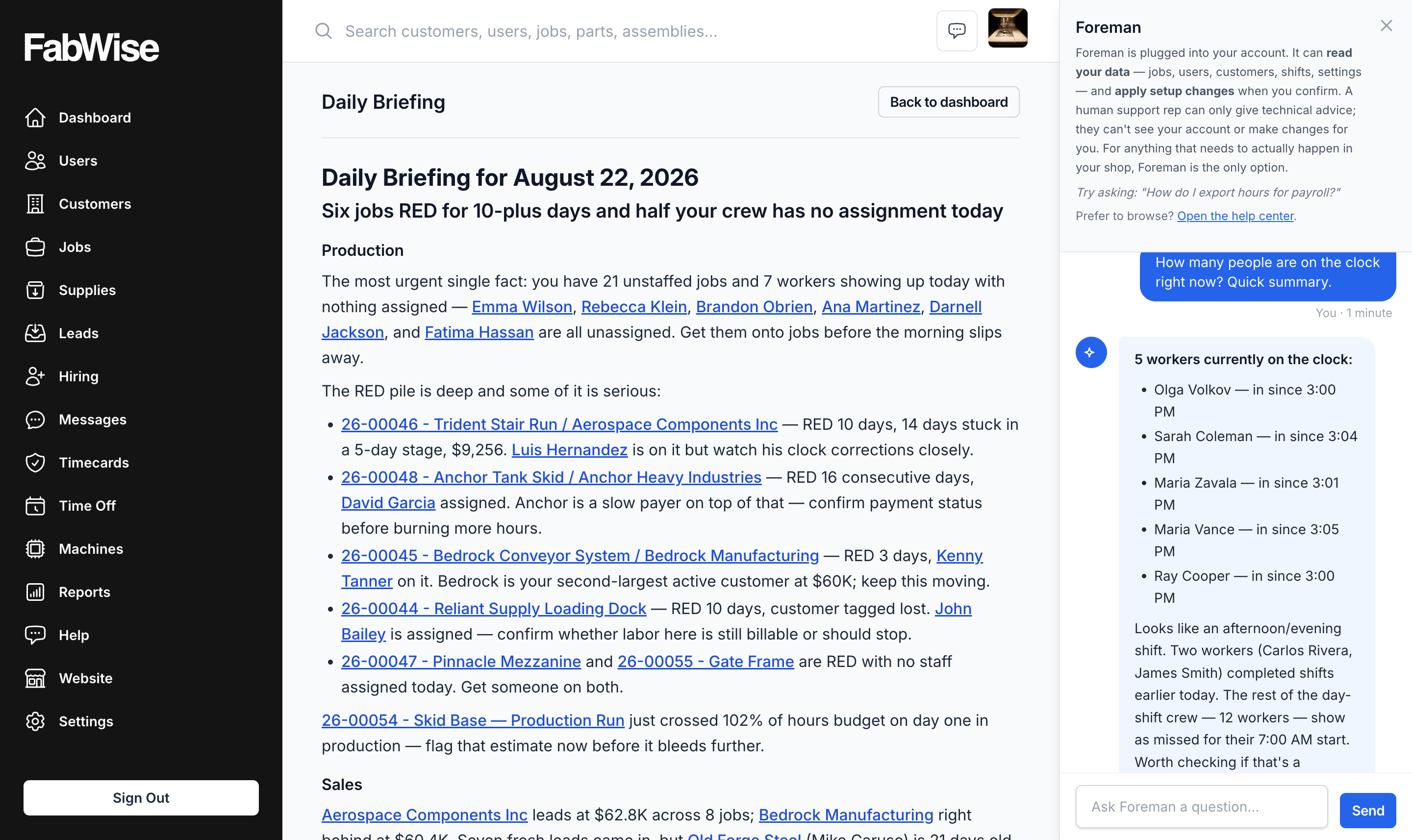
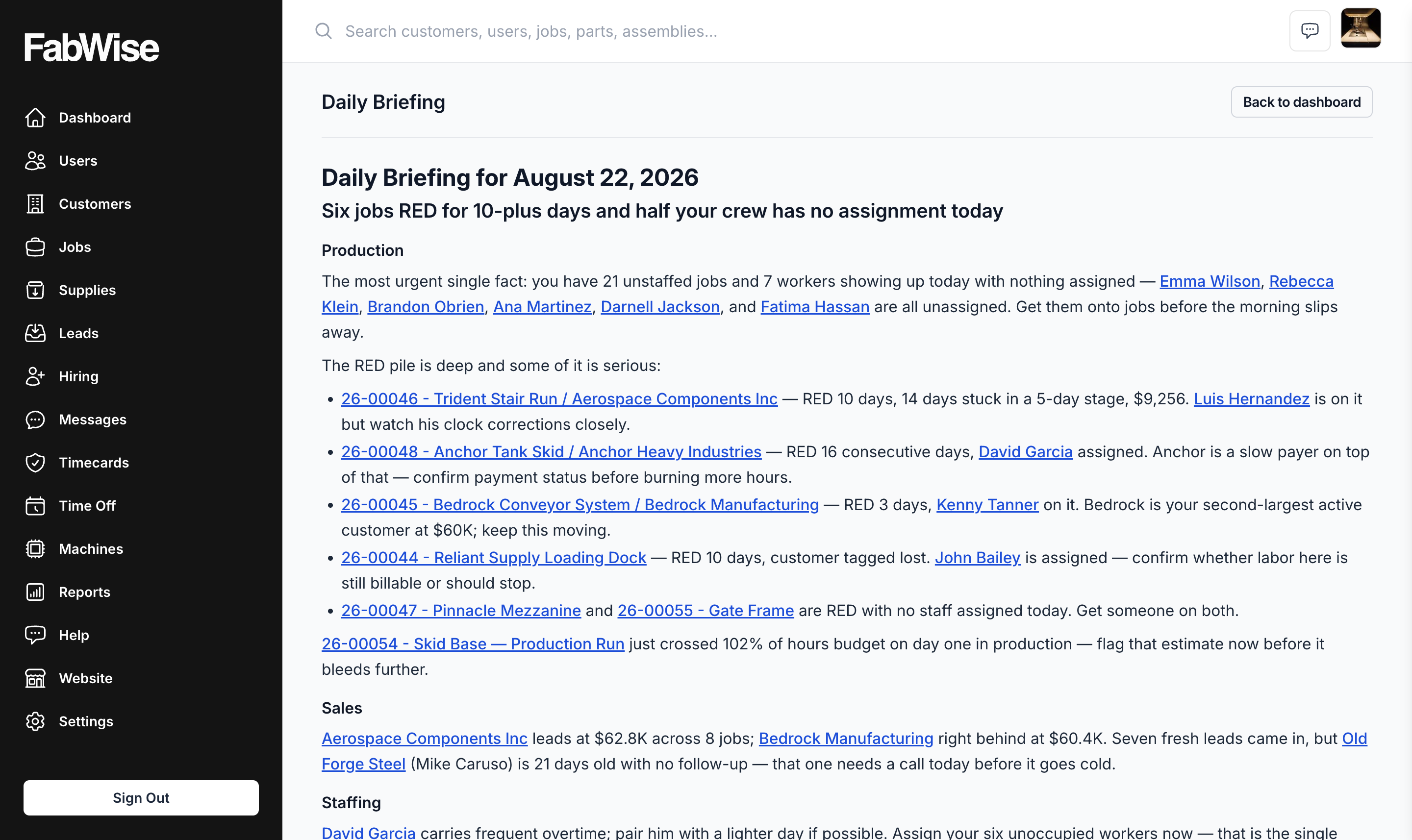
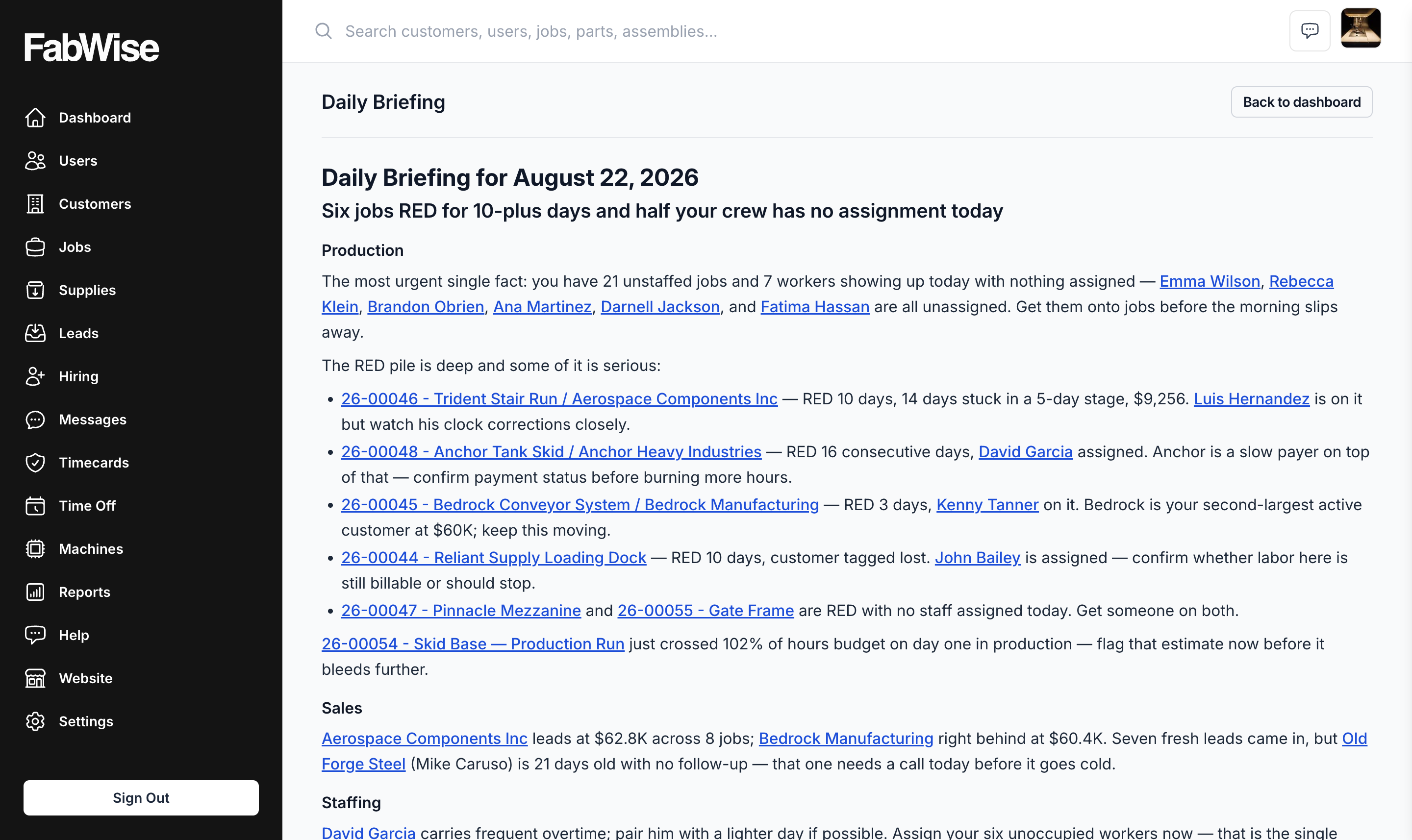
Foreman answers all three before you've opened anything. It reads your shop's own numbers overnight and writes one short, plain-spoken briefing waiting for you when you open the app.
What Foreman Does
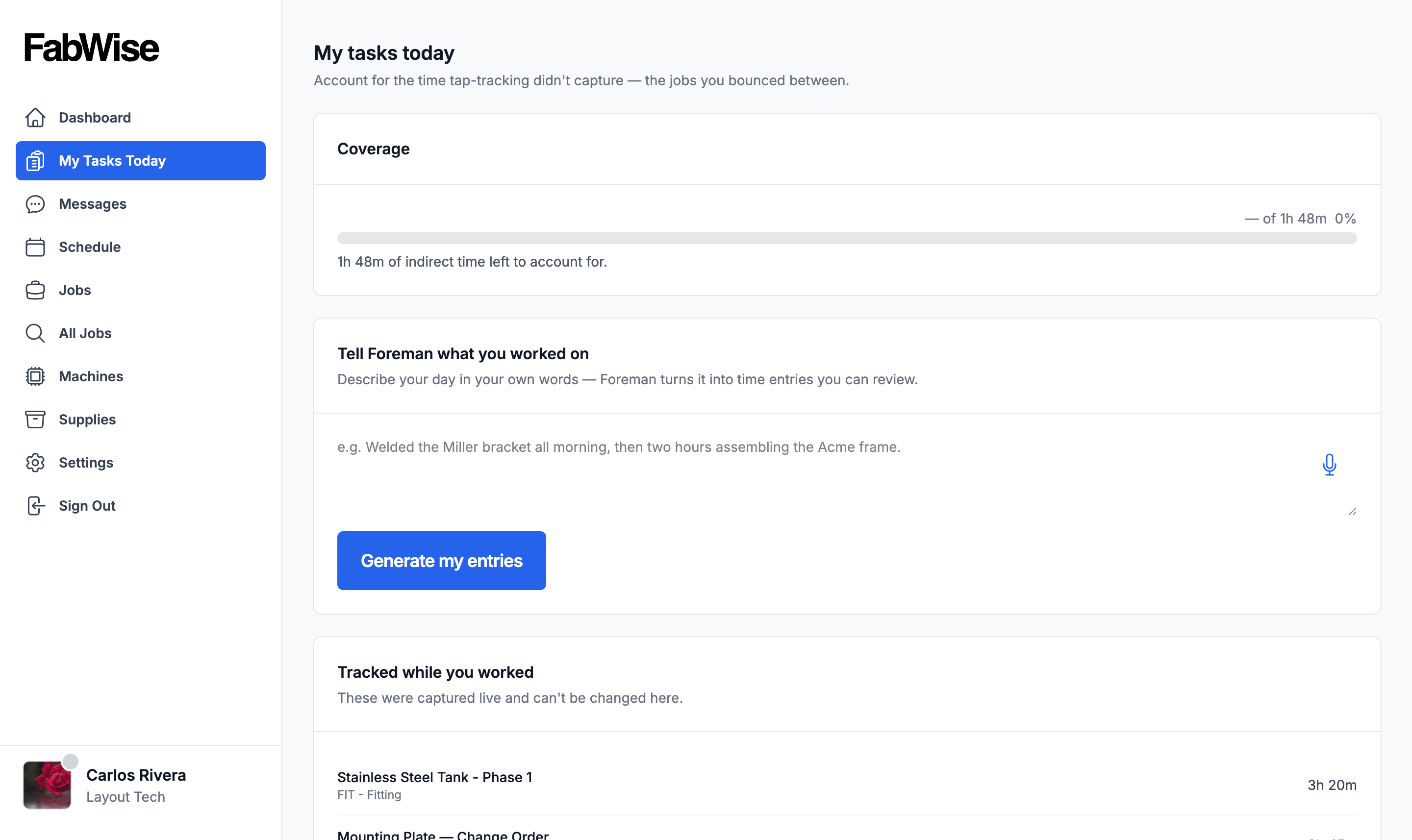
Three things: it writes you a Daily Briefing each morning, it answers questions about your shop in chat whenever they come up, and it turns a worker's spoken account of their day into task entries at the end of a shift.
Each one has a deep-dive below.
What Foreman Doesn't Do
Foreman reads your shop's own data — shifts, jobs, customers, leads — and only that data. It doesn't make anything up: if a job doesn't have a price set yet, the briefing says so instead of guessing. Foreman doesn't clock anyone in or out, doesn't approve a shift, and doesn't touch payroll. Those stay exactly where they are today — captured at the workstation and kiosk, reviewed and signed off by a supervisor, exported to your payroll provider.
Availability
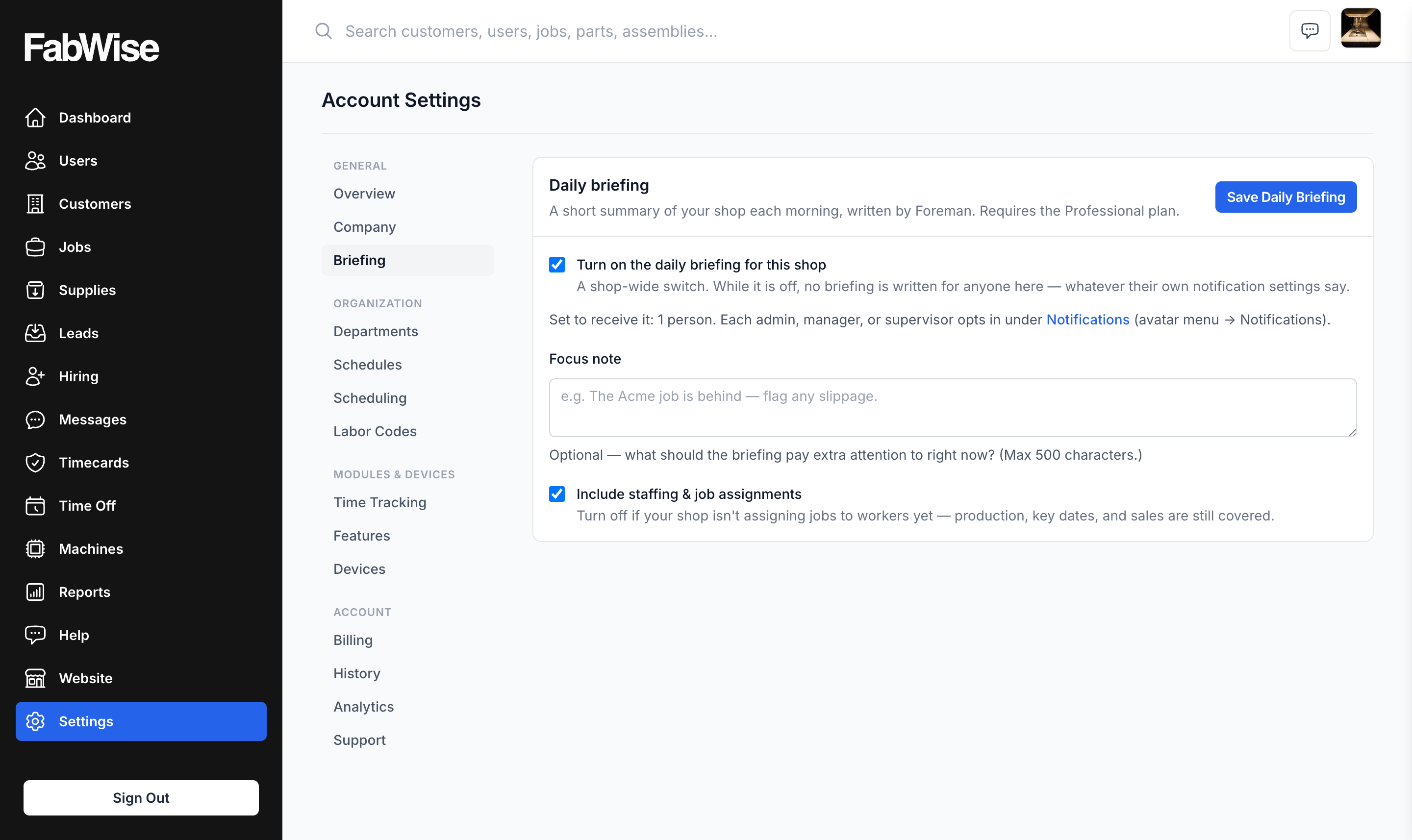
Daily Briefing and end-of-day voice allocation are Professional-tier features. Both are off by default on every plan, including Professional — an admin turns them on for the shop, and each person who wants the briefing turns it on for themselves. Nothing about Foreman runs, or shows up in anyone's dashboard, until someone at your shop switches it on.
Is Foreman Right for Your Shop?
Foreman is the right fit if:
- You're already tracking time and jobs in FabWise, and want that data working for you instead of sitting in a report nobody opens.
- You start most mornings re-deriving the same three questions — who's here, what's slipping, who needs a call back.
- You'd rather catch a job running over budget two days out than find it at invoice time.
- You're on the Professional plan and want an admin to turn the briefing and voice allocation on for the shop.
Foreman is built on the same time tracking and job costing data every FabWise shop already captures — it doesn't require a separate setup or a second place to enter information. It's what that data starts doing once someone looks at it every morning instead of once a quarter.